Written by Destiny · Astrology · 16 October 2026 · 6 min read
The Load-Bearing Wall: Reclaiming the Saturn Return as Structural Realism
Popular astrology treats the Saturn Return as a cosmic wrecking ball sent to ruin your late twenties. In practice, Saturn does not destroy—it simply measures load against strength.

Around age twenty-eight, a specific brand of existential alarm begins to circulate among people who pay attention to the sky. The stories are consistent and usually dramatic: sudden breakups, abrupt career shifts, financial reckonings, or an overwhelming sense that the ground beneath one's feet has turned to dust. Pop astrology has dubbed this period—the Saturn Return—a cosmic rite of passage characterized by misery, a sort of astronomical tax collected every twenty-nine and a half years. We are taught to brace for impact, as if Saturn were a divine wrecking ball sent to demolish whatever fragile happiness we managed to construct in our youth.
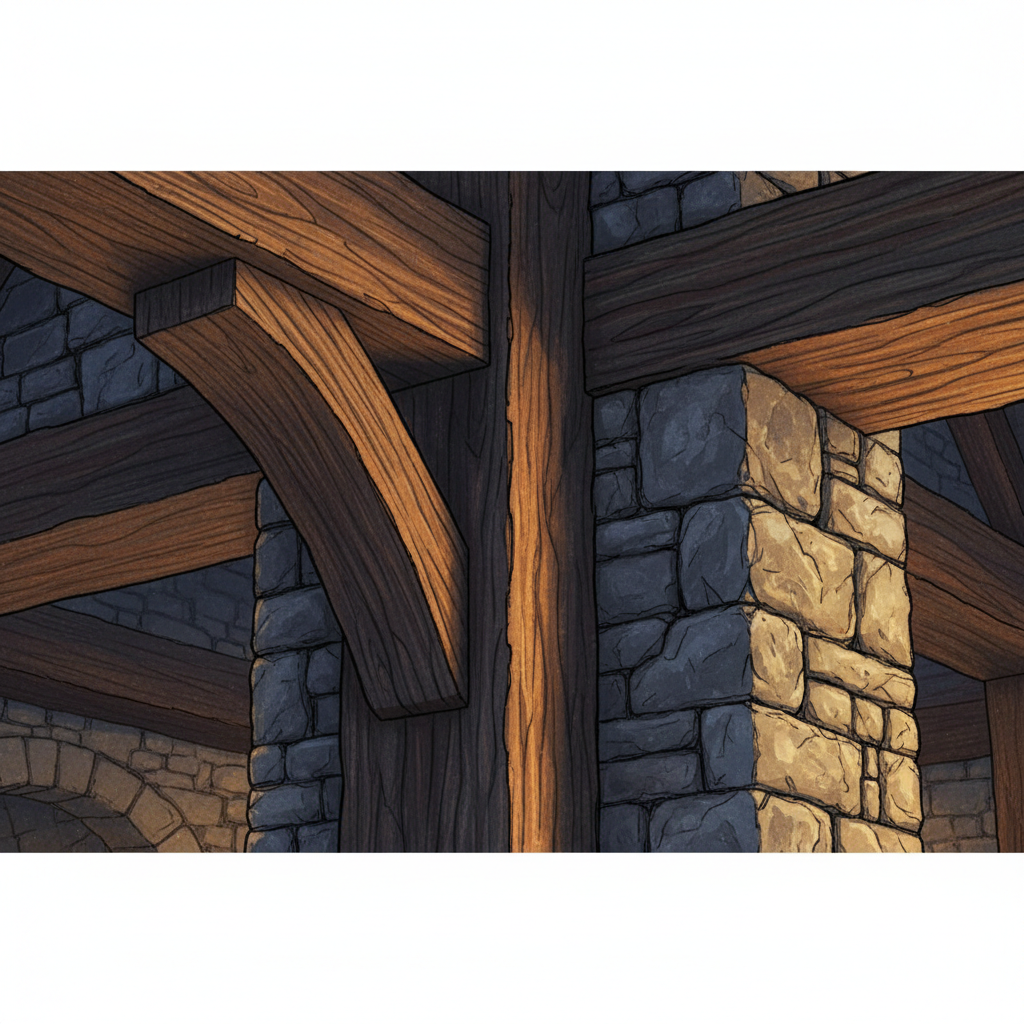
But this framing fundamentally misunderstands the archetype. Saturn is not an arbitrary punisher, nor does it take pleasure in human distress. In traditional astrology, Saturn is associated with lead, stone, architectural boundaries, and the inexorable passage of time. It is the principle of reality itself—the physical law that determines whether a timber beam can support a roof or whether a foundation is poured on shifting soil. When Saturn returns to the exact degree and sign it occupied at the moment of your birth, it does not bring destruction for its own sake. It simply applies real weight to your life to see what holds.
The Mechanics of the Return
Every celestial body has a rhythm, but Saturn’s rhythm matches the scale of human adulthood. Taking roughly 29.5 years to complete a single trip around the zodiac, its return marks the biological and psychological boundary between youth and maturity. The first return, occurring between ages twenty-eight and thirty, demands that you transition from living on inherited scripts—the expectations of parents, mentors, or social conditioning—to building a structure entirely your own. The second return, in the late fifties, asks a similar question about legacy and genuine stewardship.
In your natal chart, Saturn represents where you meet limits and where you are asked to develop mastery through time and labor. It is the cold clarity of a ledger, the boundary line of a property, the physical integrity of a load-bearing wall. For the first three decades of life, many of our choices are sustained by momentum, enthusiasm, or external approval. We take on roles because they were offered, stay in relationships because ending them creates uncomfortable friction, and adopt values we never bothered to test against lived experience.
The Return ends this period of grace. As Saturn approaches its natal position, the gap between who you actually are and the structure you have built around yourself becomes unbearable. If that structure was built out of convenience, fear, or someone else's blueprints, it will begin to groan under the weight of reality. What feels like a sudden catastrophe is almost always the overdue collapse of something that was already hollow.
Stress Testing as a Diagnostic Tool
In structural engineering, stress testing is not an act of malice against a building. Engineers deliberately apply calculated force to structural components to locate hidden fractures, material fatigue, or design flaws before catastrophe occurs in the wild. If a support beam cracks during a stress test, the engineer does not curse the weight; they thank the test for revealing a failure point while repair is still possible.
Saturn operates as the sky’s master engineer. When a transit or return coincides with a crisis, the transit did not cause the fragility—it exposed it. A partnership that dissolves during a Saturn Return rarely fails because of transiting planets; it fails because its load-bearing capacity was predicated on unspoken compromises or unaddressed resentments that could no longer sustain two evolving adults.
Reframing the experience this way shifts your role from victim to craftsperson. If a part of your life breaks down under Saturnian pressure, the goal is not to mourn what was inherently fragile, nor to curse the sky for your discomfort. The goal is to inspect the fracture with cold, non-judgmental curiosity. What materials were you using to build that part of your life? Were you using people-pleasing instead of honest communication? Were you relying on panic instead of sustainable systems?
Locating the House of Integrity
A Saturn Return does not flatten your existence indiscriminately; it delivers its primary load to a specific sector of your life. The astrological house containing your natal Saturn reveals the primary arena where this structural audit occurs. If Saturn resides in your fourth house, the pressure settles onto family dynamics, home, physical living space, and psychological roots. If it sits in your seventh house, the stress test zeroes in on contractual commitments, marriage, and long-term partnerships.
The zodiac sign hosting your Saturn provides the rules and material texture of the build. Saturn in an earth sign demands physical, material, and financial accountability. Saturn in an air sign insists on intellectual rigor, clear communication, and honest social contracts. Saturn in a water sign demands emotional boundaries and the end of codependent caretaking, while Saturn in a fire sign tests your creative stamina and the authenticity of your self-expression.
By mapping the exact house and sign of your natal Saturn, you strip the event of its vague terror. Instead of feeling like you are drowning in bad luck, you gain a specific, bounded workspace. You can look at the house placement and see where you are being asked to stop taking shortcuts and where you must assume personal authority.
The Craft of Voluntary Contraction
The most effective posture during a Saturn Return is voluntary contraction. In a culture obsessed with perpetual expansion, higher yields, and endless growth, contraction feels like failure. But winter is not a failure of the forest; it is the necessary retreat of vitality into the root system so the tree can survive another season. Saturn demands a similar seasonal pruning.
Voluntary contraction means paring down your commitments to what is genuinely essential and sustainable. It means saying no to opportunities that look impressive on paper but breach your functional capacity. It means auditing your time, money, and energy with cold precision. When you proactively shed what is superficial, you reduce the surface area that Saturn’s structural weight can crack.
This process requires adopting Saturnian virtues: patience, quiet routine, emotional restraint, and a willingness to tolerate short-term discomfort for long-term stability. Saturn respects slow labor. It does not reward grand gestures or frantic fixes. It rewards the unglamorous work of showing up every day to lay one solid, squarely aligned brick upon another.
What Endures
The Saturn Return typically lasts about two and a half years from the time Saturn enters the sign of your natal placement until it leaves. When the transit finally concludes, the landscape looks fundamentally different. The clutter, the false starts, and the performative obligations are gone. What remains in their place may feel smaller at first, but it possesses an extraordinary property: it is real.
There is a profound, quiet dignity on the other side of this transit. Having seen what survived the pressure, you no longer need to spend energy maintaining illusions. You know where your boundaries are because you watched them hold. You know what work you are capable of because you did it when it was difficult. You cease looking for external permission to occupy your own life, because authority, once earned through Saturnian labor, cannot be revoked by anyone else.
Saturn does not take away what truly belongs to you; it removes what was never yours to keep. The structures that survive your Saturn Return are not temporary shelters. They are the bedrock upon which the rest of your life will be built.
This week, conduct a load audit on one area of your life—your work calendar, a primary relationship, or your household finances. Write down three obligations within that area that you maintain purely out of habit, guilt, or fear of disapproval. Choose one, and enact a firm, quiet structural boundary: end the unviable project, decline the non-essential task, or set a clear limit on your availability. Treat this not as a confrontation, but as a simple act of architectural maintenance.