Written by Destiny · Tarot · 11 October 2026 · 6 min read
The Suspended View: What The Hanged Man Teaches About Stalled Momentum
A close study of Card XII—why voluntary suspension is not paralysis, how to read its arrival in a spread, and how to use it when your plans grind to a halt.
When momentum dies, our immediate instinct is panic. We treat a sudden lack of forward motion in a project, a relationship, or a career as an urgent error to be corrected through sheer force of will. We double our efforts, send the desperate follow-up email, re-edit the draft for the fifth time, or demand immediate clarity from an ambiguous situation. In our cultural grammar, to stop moving is to begin failing. Yet when Card XII—The Hanged Man—appears in a reading, it places a heavy, deliberate hand on the brake. It does not announce a catastrophe or a permanent wall, but rather a sharp, non-negotiable pause.
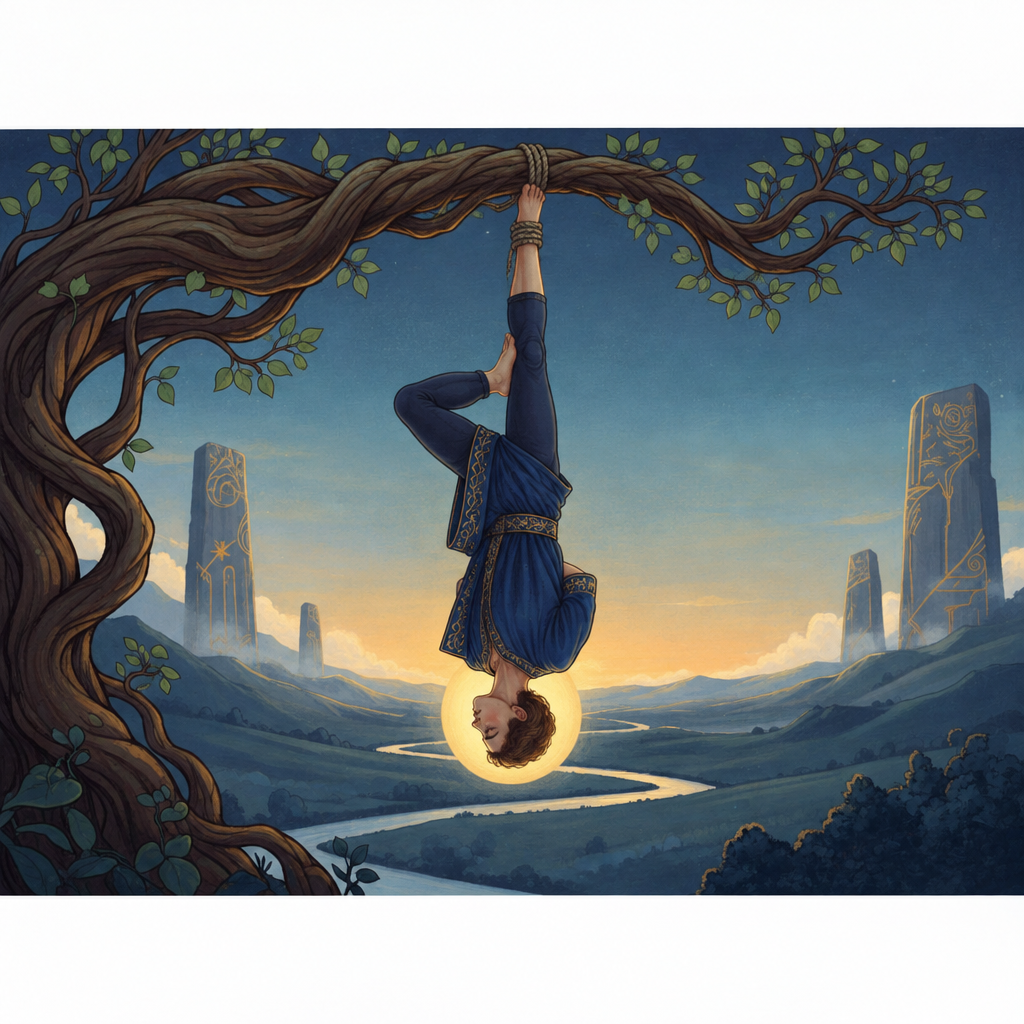
To understand this card, one must first unlearn the popular iconography of execution. In Pamela Colman Smith’s classic rendering for the Rider–Waite–Smith deck, the figure suspended by his ankle from a wooden cross does not look tormented. He is not struggling against his ropes, nor is his face contorted in agony. His countenance is serene, his eyes open and alert, and around his head shines a glowing halo of illumination. He hangs from a T-shaped gallows fashioned from living, leaf-bearing wood. This is not a scene of punishment; it is an image of deliberate, calculated surrender. The Hanged Man has allowed himself to be bound so that he might see the world from an entirely different axis.
The Imagery of Choice and Living Wood
Every detail of Card XII emphasizes that this posture is an initiation rather than an execution. The gallows is carved from a living tree—traditionally associated with the Norse world-tree Yggdrasil or the Kabbalistic Tree of Life—showing fresh green shoots sprouting from its bark. Growth has not stopped; it has merely changed its medium. The figure's left leg is bound, but his right leg is bent comfortably behind it, forming the shape of the numeral four or the cross of matter. His arms are folded casually behind his back, forming an inverted triangle beneath his head. This geometry is precise: the triangle of spirit submerged beneath the cross of physical form.
The most striking element remains the halo. In traditional Western art, a nimbus of light indicates divine insight or spiritual breakthroughs. That Smith placed this light around the head of a man hanging upside down tells us something essential about the nature of clarity: it rarely arrives while we are running at full speed. Real perspective requires an inversion of our normal stance. The halo is the direct consequence of the suspension. By surrendering his ability to march forward, the figure earns a moment of unclouded, radical vision.
The Difference Between Stuckness and Suspension
In practical consultation, the central challenge of reading The Hanged Man lies in distinguishing between involuntary paralysis and voluntary suspension. Paralysis is the state of being trapped by fear, indecision, or external circumstance while desperately wishing to move. It is exhausting because your wheels are spinning against mud; you consume vast amounts of energy attempting to restore a direction that is currently unavailable to you. Paralysis fights the halt. It views the delay as an enemy to be conquered or outsmarted.
Suspension, by contrast, is a choice to stop fighting the stillness. When you embrace the energy of Card XII, you cease trying to force an outcome that is not ready to yield. You acknowledge that your current orientation, no matter how heavily you have invested in it, is no longer producing clarity. Suspension requires you to stop kicking. It asks you to hang quietly, let the blood rush to your head, and allow the inverted landscape to reveal details you were moving too fast to see. Where paralysis drains your vitality through useless effort, suspension conserves it for the moment when action becomes meaningful again.
Reading Card XII in Practical Contexts
When The Hanged Man surfaces in a spread, it is almost never an invitation to push harder. If you are asking about a stalled negotiation, a delayed publication, or an uncertain personal dynamic, the card advises against forcing a resolution. Pushing against a Hanged Man transit only tightens the knot around your ankle. The card indicates that the missing variable in your equation cannot be discovered through your current line of inquiry. You must allow the situation to remain unresolved long enough for new context to emerge on its own terms.
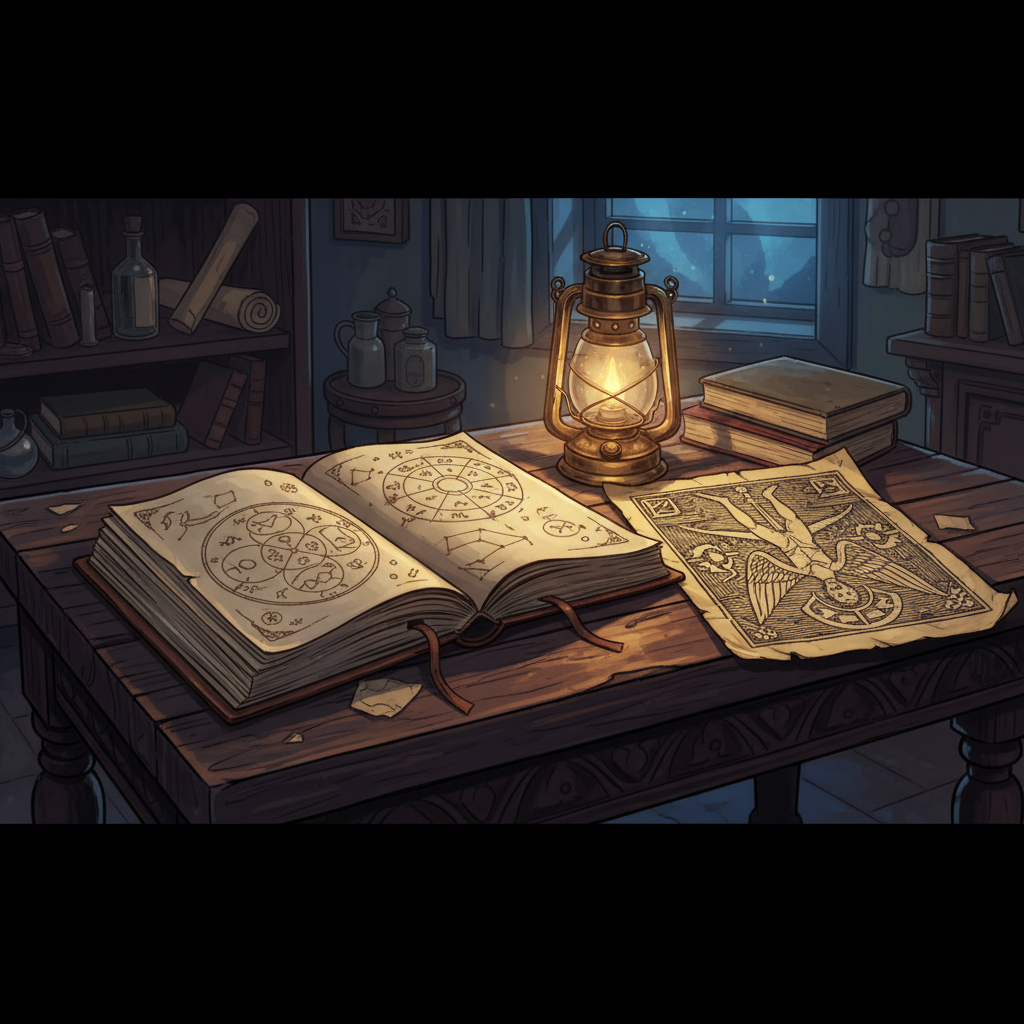
This makes Card XII one of the most frustrating cards for modern practitioners, who often come to tarot seeking tactical steps and immediate remedies. The Hanged Man offers no tactics beyond waiting, but it redefines waiting as an active, deliberate discipline. It suggests that the delay itself is the work. The period of non-action is not dead space between meaningful events; it is the incubation period during which your understanding of the problem matures. To act prematurely under this card’s influence is to cut down a crop before it has ripened, sacrificing long-term clarity for short-term relief from discomfort.
The High Price of the Reversed Perspective
Viewing the world upside down is not a cost-free exercise. To see things from The Hanged Man’s vantage point, you must be willing to surrender something valuable: a cherished assumption, a well-rehearsed grievance, or an ambition that has outlived its usefulness. In traditional interpretations, this card is heavily tied to the concept of sacrifice. But this is not the theatrical, martyr-like sacrifice of giving up your well-being for another's approval. It is the quieter, far harder sacrifice of letting go of your need to be right, your need to control the timeline, or your attachment to a specific outcome.
When you hang upside down, the floor becomes the ceiling and left becomes right. The values you prioritized while standing upright may suddenly appear trivial, while matters you neglected demand your full attention. This structural reordering can be deeply unsettling. It forces you to admit that your previous approach was insufficient or built on flawed premises. The halo only lights up when you accept this disorientation without trying to scramble back onto your feet before the lesson has taken hold.
The Bridge to Transformation
In the sequential structure of the Major Arcana, The Hanged Man occupies a critical position directly preceding Card XIII, Death. This placement is not accidental. You cannot enter a genuine phase of transformation or profound ending without first undergoing the voluntary pause of Card XII. Death requires the shedding of old forms, but it is The Hanged Man that prepares you to let them go. Without this period of suspended reflection, any attempt at personal renewal or strategic pivot remains superficial—a mere changing of clothes rather than a fundamental shift in posture.
The Hanged Man is the bridge between striving and release. It teaches us that before we can dismantle an old pattern, we must spend time observing it without trying to fix it immediately. By remaining still in the space between what was and what will be, we cultivate the psychological durability required to face real change. The card reminds us that true mastery over our choices includes knowing when to relinquish the steering wheel entirely and trust the gravity of the moment.
This week, locate one area in your work or personal life where you are currently burning energy trying to force an outcome that refuses to move. Instead of sending another follow-up, tweaking the plan again, or agonizing over the delay, call a formal 72-hour moratorium on all action related to that issue. Step back, state clearly to yourself that you are entering a voluntary pause, and use those three days solely to observe the situation without attempting to influence it. Notice what details become visible only when you stop trying to control the result.