Written by Destiny · Decisions · 30 September 2026 · 5 min read
The Texture of Knowing: How to Tell Intuition from Fear in Complex Decisions
Anxiety demands immediate action to silence a somatic fire, while intuition offers a quiet, unhurried assessment of what is already true. Learning to tell the difference is the foundational skill of clear-headed decision-making.
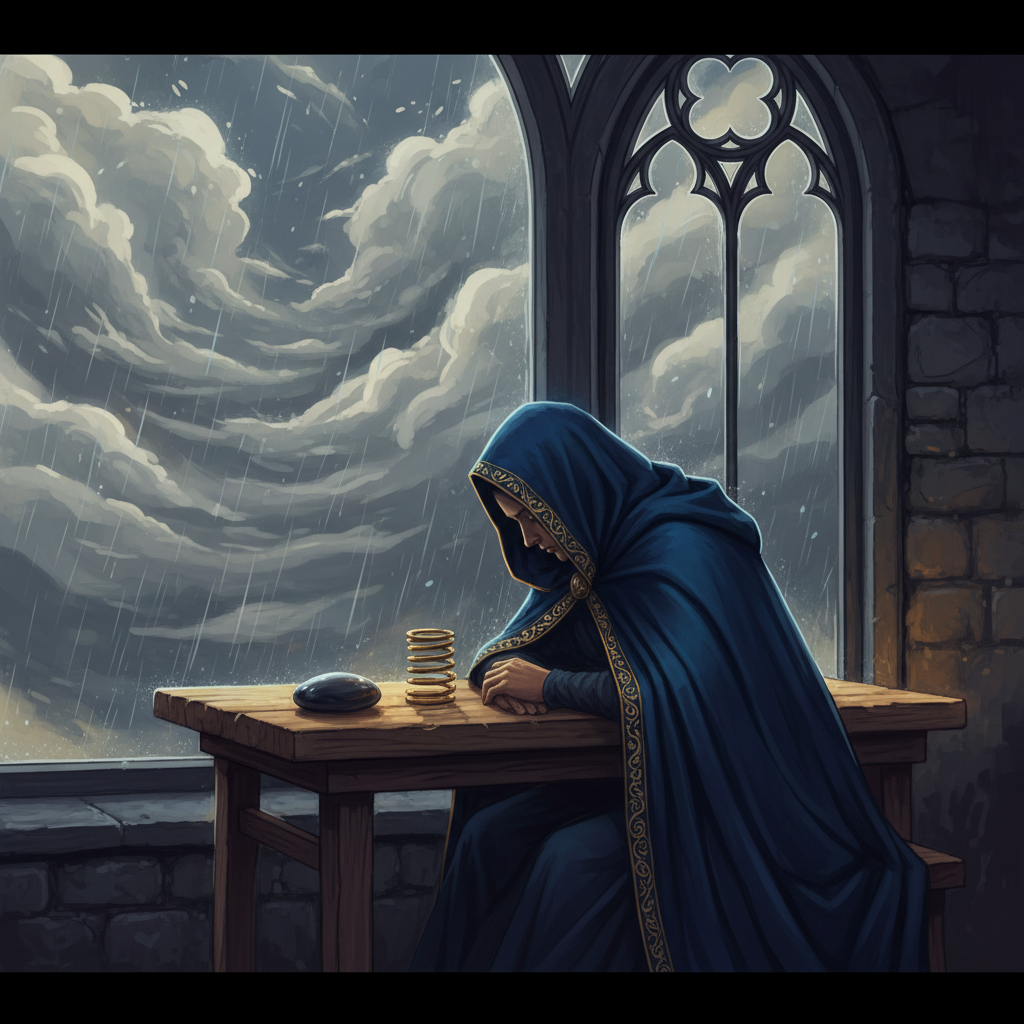
You sit at a turning point—a career shift, an uncomfortable conversation, a decision to stay or leave—and a sharp, demanding sensation rises in your chest. "This is wrong," it says, or perhaps, "Get out now." You call it your gut. You call it your instinct. You act on it quickly, burning the bridge or turning down the offer, only to discover three days later that the underlying restlessness remains completely unchanged. What felt like an absolute, inner truth was merely a spike in baseline adrenaline: a nervous system panicked by novelty.
The confusion between intuition and anxiety is one of the most common taxations of adult life. We are routinely advised to "trust our gut," yet our guts are frequently inflamed by hyper-vigilance, past conditioning, and simple physical fatigue. If every visceral reaction is treated as a subtle oracle, we end up living reactive, fragmented lives—mistaking the smoke alarm for an inner prophet. To make sound, sustainable choices, we have to learn the distinct textures of these two internal signals.
The Engine of Urgency: Anatomy of an Alarm
Anxiety is marked above all by speed and coercion. It speaks in the imperative mood, demanding immediate resolution to alleviate physical distress. In the vocabulary of the Rider–Waite–Smith tarot, anxiety is captured cleanly in the Nine of Swords: a figure sitting upright in bed, face buried in their hands, surrounded by nine heavy blades suspended in the dark. The threat in the Nine of Swords is rarely an external enemy standing at the foot of the bed; it is the mind feeding upon its own runaway generated scenarios. It insists that if you do not decide right now, catastrophic ruin will follow.
Physiologically, anxiety triggers the sympathetic nervous system. Your pulse quickens, breath stays shallow in the upper chest, and your body prepares for fight or flight. When an option presents itself under this influence, the drive to choose is rarely about building something sustainable. It is about ending the acute discomfort of uncertainty. It is an act of evacuation, not navigation.
In practical decision-making, anxiety relies heavily on binary extremes: *If I don't leave this job today, I will be trapped forever. If I don't confront this person immediately, the relationship is ruined.* It leaves no room for nuance, no space for dialogue, and no patience for timing. It routinely mistakes relief for resolution.
The Neutrality of Knowing: What Intuition Actually Feels Like
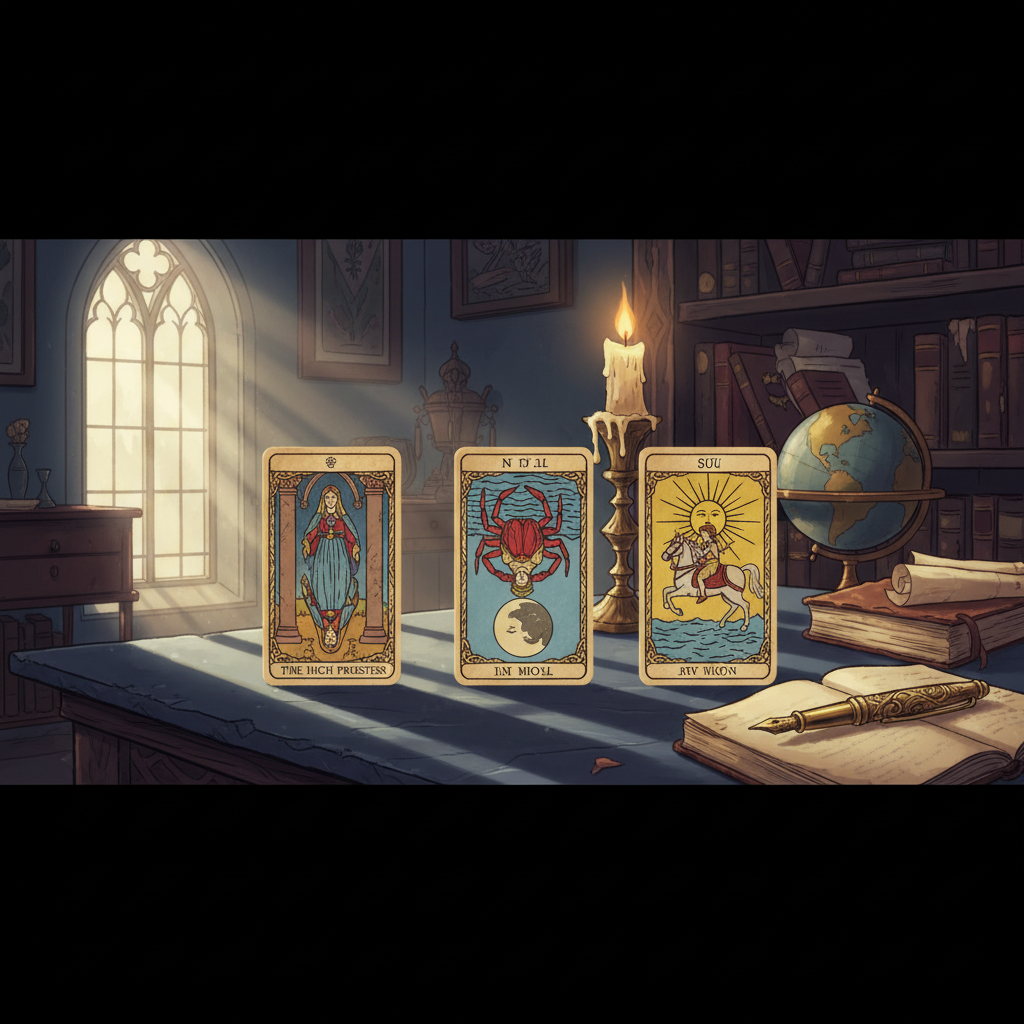
Intuition operates on an entirely different frequency. Where anxiety is frantic and loud, intuition is quiet, flat, and persistent. It rarely brings an adrenaline rush. In fact, true intuitive clarity can feel shockingly cold, even when delivering disappointing news. Consider the High Priestess sitting between the dark and light pillars of Boaz and Jachin: she does not plead, negotiate, or pace the floor. She simply sits with the scroll in her lap. Intuition is an act of clear observation, not a call to panic.
Astrologically, we might trace this distinction to the difference between a troubled Mercury-Uranus alignment—which produces rapid-fire mental jitter, sudden shocks, and hyper-fixation—and a grounded Saturnian or lunar intelligence. Real intuitive insight feels less like a lightning bolt setting a field on fire and more like a stone settling to the bottom of a deep well. It carries weight, but it does not shatter the vessel.
Crucially, intuition is unhurried. An intuitive realization about a project or a partnership will still be true tomorrow morning, next week, and next month. It does not evaporate once your blood pressure drops. It is not trying to rescue you from the present moment; it is simply pointing out an objective reality that your conscious mind may have tried to rationalize away.
Testing the Signal: The Interrogation Protocol
Because both signals originate within the body, distinguishing them requires deliberate friction—a brief, structured delay between sensation and action. When you feel a sudden, overwhelming urge to make a radical choice, your primary duty is not to execute the choice, but to audit the impulse.
Start by asking a fundamental diagnostic question: *Does this urge feel like an expansion or an escape?* Intuition often opens space, even when the choice is difficult or painful. It carries a sense of clean, sobering alignment. Anxiety, conversely, feels narrow, suffocating, and defensive. It seeks to close doors, tear up papers, and run out the back exit before anyone notices.
Second, apply a mandatory time-lock. Unless there is physical danger or a literal fire, almost no high-stakes decision in adult life requires an answer within thirty minutes. Set a timer for twenty-four hours. Tell yourself: *I accept that this might be the right choice, but I will not execute it until tomorrow morning.* Anxiety panics at a time-lock because it cannot tolerate prolonged uncertainty. Intuition, however, is comfortable in the waiting room; it remains completely unaffected by the delay.
Using the Deck as an Audit Tool, Not an Oracle
When working with tarot during moments of high internal noise, the temptation is to use the cards to validate your panic. You draw three cards asking, "Should I walk away right now?" and then interpret every sword and tower as a green light to burn your life down. This is not clear seeing; it is confirmation bias fueled by cortisol.
A more practical application uses the deck to separate emotional weather from structural reality. Instead of asking what will happen if you act on your impulse, pull two cards to contrast your internal landscape: Card A represents *The Fear I Am Trying to Escape*, and Card B represents *The Grounded Reality of the Situation*.
If Card A reveals the Eight of Swords (self-imposed entrapment and mental paralysis) while Card B reveals the Four of Pentacles (a need for conservation and boundaries), the diagnosis is clear. Your sudden urge to blow up the agreement is not an intuitive leap toward freedom, but an anxious attempt to regain control because you feel temporarily exposed. The cards serve as a mirror for your somatic state, forcing you to inspect the wiring before you flip the breaker.
The Practice: A Concrete Audit for This Week
To build this discrimination, you must practice on small decisions before relying on it during major life transitions. You cannot learn to steer a ship in a storm; you practice keeping the tiller steady in a calm bay.
This week, identify one pending decision that carries a minor sting of urgency—answering an uncomfortable email, declining an invitation, or changing a routine. Do not act on it immediately.
Apply this three-step audit: First, write the proposed decision down on paper. Sit quietly for two minutes and observe your body. Record where the sensation lives: is it a fluttering tightness in the chest and throat (anxiety), or a low, quiet weight in the lower stomach (grounding)? Second, enforce a mandatory twelve-hour hold on taking action. Third, return to your notes the following morning. If the clarity remains steady, sober, and unhurried, proceed with confidence. If the urgency has evaporated into simple indifference, recognize the alarm for what it was—a transient nervous system spike—and let it pass without giving it the wheel.