Written by Destiny · Astrology · 13 November 2026 · 5 min read
The Furnace and the Blade: Reading Natal Mars as Your Conflict Mechanics
Understanding your natal Mars is not about bracing for bad tempers. It is an audit of how you exert force, establish boundaries, and navigate necessary friction.
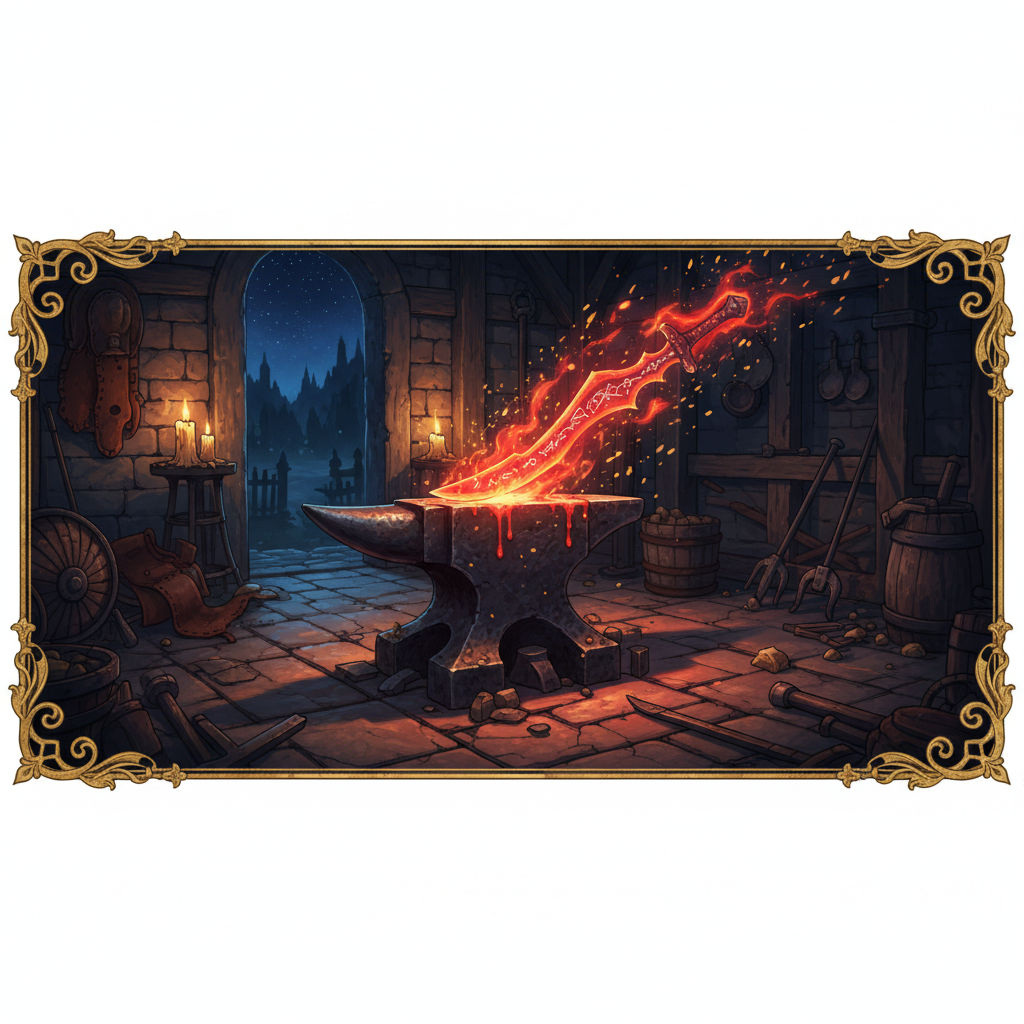
Popular astrology often treats Mars like a blunt instrument—a cosmic light switch for temper tantrums, physical drive, or sudden impulse. But in traditional astrological mechanics, Mars represents something far more foundational to daily survival: kinetic force and separation. Mars is the part of the human psyche that knows how to differentiate self from non-self. It is the boundary marker, the iron fence, the surgical scalpel, and the safety valve. When we analyze how someone handles conflict, we are not measuring moral character; we are examining the specific mechanical construction of their natal Mars.
Friction is not an anomaly in life; it is the natural byproduct of two distinct entities occupying shared space with limited resources or competing priorities. Attempting to navigate work, relationships, or creative output without an operational Mars is like operating heavy machinery without brakes or a steering column—you remain entirely at the mercy of whatever obstacle you strike. Understanding your natal Mars placement allows you to move away from moralizing your anger and toward auditing your internal mechanics of force.
The Mechanics of Heat: Fire and Air Mars
Mars in fire signs (Aries, Leo, Sagittarius) operates through rapid combustion. When friction arises, the primary objective of Fire Mars is immediate discharge. In Aries, it manifests as a tactical breach—clear the obstruction instantly and evaluate the damage later. In Leo, conflict becomes a matter of dignity and territorial integrity; the temperature remains high until order and respect are re-established. In Sagittarius, friction is framed as an ideological campaign, fighting on principle and often overshooting the immediate interpersonal issue. The strength of Fire Mars is unvarnished clarity; there is rarely any doubt about where the line is drawn. Its central vulnerability is collateral damage—burning down the structure simply to clear a cobweb.
Air placements (Gemini, Libra, Aquarius), by contrast, cool Mars down into an intellectualized weapon. Mars in Air does not want to wrestle physically or emotionally; it wants to debate, reframe, or out-maneuver. In Gemini, conflict is waged through verbal agility, rapid pivots, and overwhelming arguments. In Libra—where Mars is traditionally in its detriment—conflict is frequently suppressed under the guise of diplomacy until it erupts as hyper-strategic passive aggression or sudden detachment. In Aquarius, Mars fights from an ideological high ground, treating personal friction as a systemic defect to be analyzed rather than an emotion to be felt. The risk here is disembodiment: turning a visceral human conflict into a courtroom trial where winning the argument replaces resolving the fracture.
The Submerged Current: Water and Earth Mars
Earth placements (Taurus, Virgo, Capricorn) convert Mars into structural leverage and endurance. Mars in Taurus is exceptionally slow to ignite, but once set in motion, its momentum is absolute; its conflict style is an unyielding siege, holding ground until the opposition wears down. In Virgo, Mars acts as a fine file—conflicts are fought over procedural detail, precision, and efficiency, picking at structural flaws until the wall buckles under its own weight. In Capricorn—where Mars is exalted—the planet achieves its highest mechanical efficiency. Mars in Capricorn does not waste heat; it plans long campaigns, uses friction as constructive energy, and treats conflict as a logistics problem. The failure mode of Earth Mars is stubborn inertia, holding dead ground simply because it cost effort to acquire it.
Water placements (Cancer, Scorpio, Pisces) move Mars into defense, emotional pressure, and subterranean currents. Mars in Cancer—its sign of fall—is intensely self-protective, reacting to perceived threats by retreating into a hard shell or striking sideways when cornered. In Scorpio, where Mars exercises traditional co-rulership, the energy is concentrated, quiet, and surgical; conflict is rarely forgotten, and counter-strikes are calculated for maximum structural impact. In Pisces, Mars loses its sharp edge, diffusing energy into evasiveness, martyrdom, or indirect resistance. Water Mars reminds us that friction is rarely about the surface trigger; it is about boundary integrity, safety, and emotional leverage.
House Placements and the Arena of Battle
While sign placement dictates how Mars burns, house placement reveals where the furnace is located. A 1st House Mars wears its edge on its sleeve, approaching the environment with immediate self-assertion. A 7th House Mars often projects its sharp edges onto others, experiencing conflict primarily through partners, opponents, and external adversaries, frequently mistaking its own disowned aggression for external hostility.
In the succedent and cadent houses, Mars operates with different strategic constraints. A 4th House Mars fights over foundational security, psychological roots, and domestic boundary lines, often turning the home into either a fortified bunker or an active arena. An 8th House Mars manages high-stakes psychological mergers, shared assets, and power dynamics, treating every conflict as an audit of trust and control. A 10th House Mars channels kinetic force into public standing and professional ambition, viewing every career obstacle as a hill to be taken. Identifying your house placement prevents you from asking "Why am I like this?" and forces the more useful question: "Why am I wearing full armor in this specific room?"
The Necessity of the Severing Blade
Traditional astrology categorized Mars as the "lesser malefic"—a title earned not because Mars is evil, but because its operation is uncomfortable. Mars severs, burns, punctures, and separates. In a culture that frequently prioritizes artificial harmony, the severing function of Mars is often pathologized. People are taught to apologize for their boundaries, to dilute their refusal, and to treat anger as a moral failing rather than a physiological alert that territory has been invaded.
An unintegrated Mars leads to two predictable failure states: explosion or implosion. When Mars energy is systematically suppressed, it turns inward, manifesting as chronic resentment, somatic fatigue, passive sabotage, or sudden non-linear blowups over minor slights. When Mars is unmoderated by self-awareness, it turns outward as petty tyranny, volatility, and wanton destruction. A mature spiritual practice requires accepting that the knife is an indispensable tool. You do not use a scalpel to frame a house, but when you need to excise what is decayed or non-functional, no other instrument will serve.
The Friction Audit: A Practical Weekly Exercise
To bring your natal Mars into functional alignment, stop treating your conflict style as an unchangeable personality trait and start observing it as a mechanical process that can be calibrated. Managing conflict is not about suppressing heat; it is about directing kinetic force so that it clarifies rather than destroys.
This week, perform an honest friction audit on one active or recent point of tension—a disagreement with a partner, an uncomfortable boundary at work, or a recurring irritation with a family member. Document three specific metrics: First, note your default reaction pattern (did you explode, retreat, intellectualize, passive-aggressively comply, or dig in?). Second, cross-reference that reaction with your natal Mars sign and house placement to identify the inherited script driving your behavior. Third, execute one deliberate calibration before the end of the week. If your Mars defaults to rapid retreat (Water or early Cancer), deliver one clear, single-sentence boundary without adding an apology or an explanation. If your Mars defaults to immediate combat (Fire or Aries), institute a mandatory 24-hour cooling window before responding to the next point of friction. Record the result not by evaluating whether you "won" the interaction, but by whether your boundary held intact without unnecessary destruction.